Welcome!

my daily life on a cattle farm, my love of agriculture, and stories behind my photos

Friday, August 25, 2017

baleage sample


baleage sample

Before the round bales were wrapped, we took 5 samples of the hay as a representative to send to the laboratory for feed analysis. The samples were taken by using a drill with an attachment that takes a core sample from the bale of hay. I placed the samples into a sealed plastic bag.

A sample of baleage was sent of the Dairyland Laboratories for analysis. It cost $16 for analysis. We have used this laboratory before for feed analysis with oatlage, haylage, and silage. We are looking forward to results since the hay is alfalfa at 10% bloom. The baleage should be really good quality! The cows should enjoy it!


The feed analysis report arrived by email. We are very happy with the results for the baleage.

baleage

We are cutting and baling third crop hay. Two fields of hay were cut and tedded to be baled. But, the hay was not drying due to cloudy and damp weather conditions. Rain was in the forecast for the next two days. We decided to bale the hay wet then wrap the bales of hay as baleage to feed to our cows.
 
 
The baler was set at the smallest setting as the bales would be heavier with baling high moisture hay. We have never baled high moisture hay, so this was a learning experience.


The New Holland BR780 round baler did a great job baling the high moisture hay! Now to move them off the field to wrap...


Even with the round baler set at the smallest setting, the bales of hay were still heavy. At roughly 40% moisture, they weighed about 1800 pounds. 


All of the bales were hauled to the location to wrap. Once we started wrapping bales, I could barely keep up setting bales onto the inline wrapper. Wrapping was a very quick process!

It was pretty neat seeing the inline bale wrapper work since I had been thinking about purchasing one. This was a great opportunity. Wrapping the bales allowed us to harvest the hay in less than ideal weather conditions. And, the hay would be perfectly preserved and protected in the wrapping.

 
We are very pleased. At $10 per bale wrapped, it was well worth the money spent. We will most definitely wrap bales again.

The cows are going to love the baleage this winter. The third cutting hay is alfalfa at 10% bloom. So, it should be very high quality! We sampled the hay and sent in a sample into the lab for analysis.

Friday, August 11, 2017

2017 calving data

It is calculated. Our calving data for 2017...


In our purebred Shorthorn cattle herd, detailed records are extremely important to us in our management. During calving season, we track information through our unique record keeping we have developed over the years.
 
We had a 98.5% calving rate for 2017. Of our calves, 56% were bulls and 44% were heifers.

We calculate calving ease to determine the percentage of calves born unassisted (on their own without our help). This calving season, 79.1% of calves were born without assistance and 20.9% of calves were assisted in birth. We monitor our cows very closely and assist cows or heifers in calving when needed. This is especially so with heifers calving for the first time. We want them to concentrate on their newborn calf. So, the percentage of assisted births are normally higher for us because we want to increase our odds of success. As cows and heifers are in process of calving, we watch for progress. If a half hour has passed after the water bag has broken and there has not been much progress, we assist the cow or heifer in calving. We do not want her or her calf to be stressed. A lack of progress may indicate a possible issue...multiple births, or malposition (breech, backwards, upside down).     

Calves are vaccinated, tagged, and weighed at birth. The average weight of calves born at farm G (2 - 4 year old cows) was 82 pounds. And, the average weight of calves born at farm M (5 - 10 year old cows) was 96 pounds. 

During the calving season, we feed hay to our cows in the afternoon. We feed our expecting cows around 4:00 pm to increase the odds of calving during the day. If cows have calving issues, we will already be awake. We have used this feeding method for more than 30 years. And, it has proven to work well for us. In 2017, 91% of calves were born during the day and 9% of calves were born at night.    

Along with this data, individual records are kept for each calf born on our farms. We are able to track each calf throughout its life. The 2017 calving data is printed on colored paper and stored in a binder for reference. And, we often refer to it.


Saturday, February 11, 2017

farm chick favorite


My friend was having a fundraiser, so I gladly made a purchase. This pouch from Thirty-One is absolutely perfect for me! LOVE the camera... actually, I adore it  :) I love arrows! So, the key fob was a must.

#farmchickfavorite

Thursday, February 2, 2017

calf kit

Calving season is approaching! So, I have been organizing and preparing. To help keep me focused, I made a 2017 calving task list. I crossed off another task on the list by putting together our calf kit. Check!
 
 
The calf kit carries... a roll of paper towels, Clorox wipes, pliers, flashlight, calf halter (if needed) temporary paper tags, glue, marker, calf weight tape, calving book, calendar, pregnancy records, Super 7+ iodine, and shots included in our health program. When a calf is born, we will take this kit with us.    
   
calf kit
 
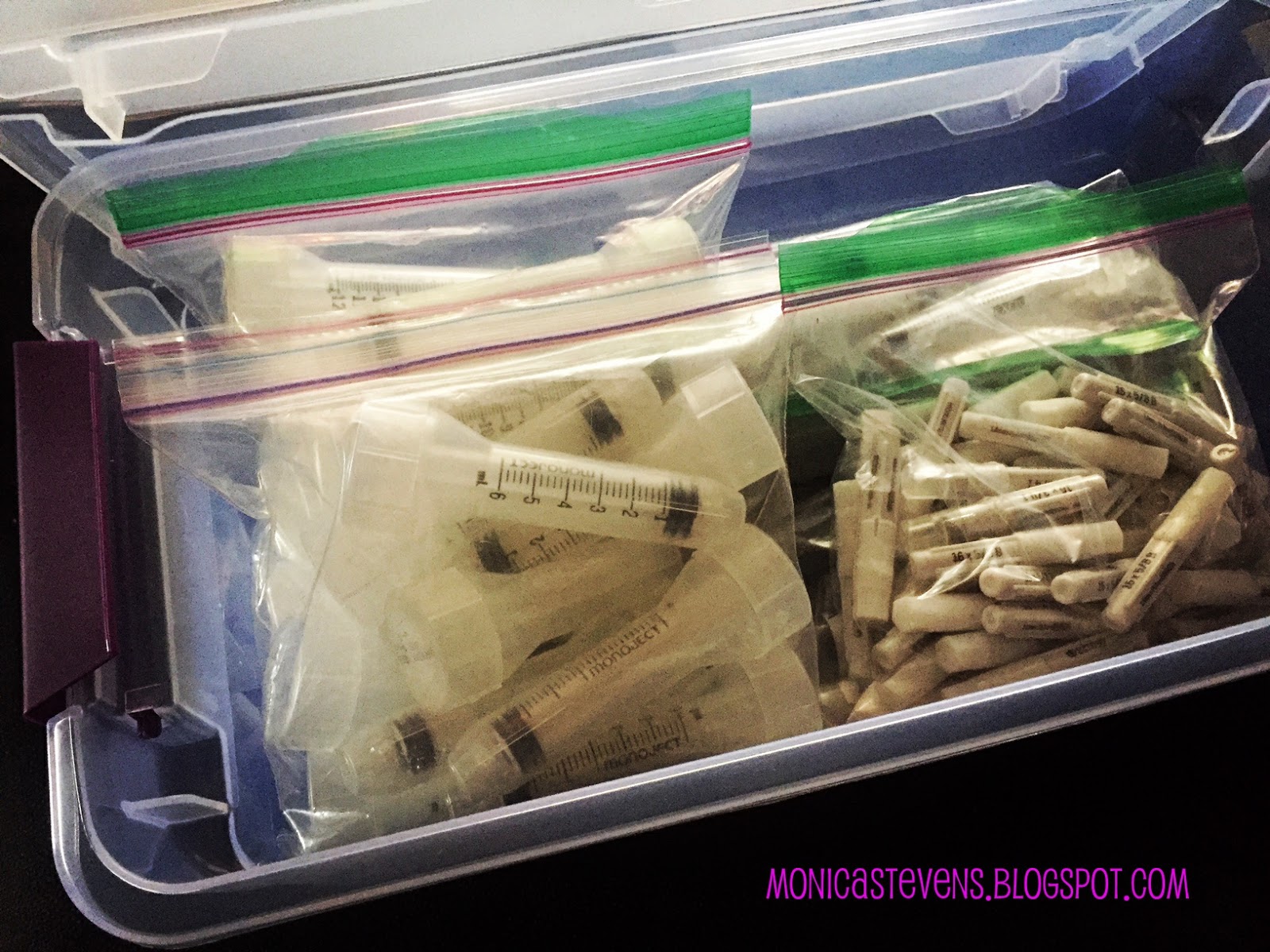
In a clear plastic box, I organized and stored extra needles and syringes of different sizes. This box is perfect to keep new needles and syringes clean and ready to use for the calving season.
 
needles & syringes
 

tagging box


Our calf tagging box is prepped to tag the 2017 calves!
 
The tagging box holds supplies for tagging our bull and heifer calves. It keeps our tags and buttons, tagger, pencil, and tag markers all together.
 
Bull calves will get an orange numbered tag. And, heifers will get a yellow numbered tag. With a tag marker, the numbered tag of the cow and bull are written on each calf tag. As calves are born, a list is kept to make tagging easier.    
 
2017 calves
 

ob calving kit


We are just under five weeks away from calving! So, I have been busy in preparation!
 
Our OB calving kit includes a bucket for soap and warm water to sanitize, a halter (if needed), 60" OB chains, two handles for the chains, and a bottle of lubrication. We also have two calf pullers on hand...one for each farm. The supplies were cleaned and sanitized to be ready in case we need to assist a cow in calving.

Saturday, January 28, 2017

silage analysis

We are feeding corn silage to our feeder calves, and herd of 2 - 5 year old cows. On Wednesday afternoon, I sent off a sample of silage for feed analysis.
 
silage sample ready to send

I pulled a sample of silage out of the bag and filled a quart sized bag to send to the laboratory. The sample was sent to Dairyland Laboratories via UPS. For a basic test, it was $16. 

silage sample report

The sample was shipped to be received on Friday. And shortly after being received, I was emailed results.
 
 
For future use of Dairyland Laboratories...forms, sample bags, and mailers were sent to me.