Welcome!

my daily life on a cattle farm, my love of agriculture, and stories behind my photos

Showing posts with label farming. Show all posts

Sunday, November 1, 2020

baling cornstalks: 2020

On Friday, my dad mowed cornstalks to prepare for baling them. After a few years of baling cornstalks for our cows, we decided to mow them before baling them this year. Mowing the cornstalks would shred the corn residue. This would also make the cornstalks more useful for bedding and feeding.  


Saturday morning, I raked the cornstalks in the field dad had mowed. Shortly after I finished raking, they were custom baled for us.


Mowing the cornstalks before raking, created more volume to bale. 


Those cornstalks! A nice windrow was made after raking.


80 bales of cornstalks were rolled up on Saturday afternoon. The cornstalks will used as bedding for cows this winter and and for cows and calves this spring during the calving season. 


The cornstalks are also fed in a ration with hay, and corn silage to our cows over the winter. The cows love them.

Thursday, October 29, 2020

corn silage 2020

On October 6, corn was chopped for silage. The silage will be fed to our cows over the winter months.

A sample of silage was collected and sent to Dairyland Laboratories for analysis. The test will provide nutritional value of the feed. It is important to know the quality of the corn silage we are feeding our cows in order to meet their nutritional requirements.  

Two 100' bags were filled with corn silage for 2020. That is 200 tons of feed. Along with the silage, hay and cornstalks will also be fed to our cows.


Our cows will enjoy the corn silage this winter!


Friday, May 1, 2020

Friday on the Farm


Two fields were prepared for seeding ground for hay. We use a mixture of alfalfa, red clover, and brome with oats. We seed at a rate of 12 pounds of alfalfa, 4 pounds of red clover, 5 pounds of brome, and 2 bushel of oats per acre. The fields were drilled on April 8 and 9. Favorable weather conditions have been perfect for growth.    

Tuesday, November 12, 2019

2019 cornstalk bales


Cornstalks have been rolled up. It was just in time... they now look like frosted mini wheats for cows.
 
Every year, we rake and bale cornstalks to use during the winter and spring months. The cornstalks are used as bedding for cows during the winter and for the cows and calves during the calving season in the spring. We are anticipating another rough winter. So this year, we rolled up over 100 bales to be prepared.
 
Cornstalks are also fed to our cows. They are fed in a ration with hay and silage. It works well for us. And, our cow enjoy it.

Friday, November 8, 2019

inline wrapping hay


Three years ago, we wrapped round bales of hay for the first time. The weather would not allow us to bale hay before forecasted rain. So, we decided to set our baler in order to bale high moisture hay. The bales were then wrapped to ensile. Wrapping the bales allowed us to bale hay despite unfavorable weather conditions.

 
Over the past three years, we have continued to wrap hay. This has given us so much flexibility in baling. And, it stores our high quality hay outside for the winter. Wrapping bales shelters the hay from weather... rain, snow, and ice. So, it preserves the quality and nutritional value of our hay. 

Sunday, November 3, 2019

2019 corn silage

 
Preparing for winter, corn was chopped and bagged this fall. The silage will be used to feed our cows throughout the winter. Along with the corn silage, the cows will also be fed hay and cornstalks.  
 
 
Two 150' bags were filled with corn silage. That is 300 tons of cow chow. Hay is in short supply this year due to a frigid winter, wet spring, and dry summer. And, we are anticipating another rough winter. We chopped and bagged double the amount of corn we normally do to ensure we have the quality and quantity of feed we need for our cows.
 
A sample of the corn silage was collected and sent off to Dairyland Laboratories for feed analysis. As cattlemen, we like to know the quality of the feed to meet the nutritional requirements of our cows.

Friday, October 25, 2019

Friday on the Farm

 
It was stunning. The sunset tonight made me slow down. I took the time to enjoy the moment. The colors were just incredible. The sun made the corn look like it was on fire. My dog, Diesel was with me in my truck. I think he even was in awe of the sunset.

Friday, November 30, 2018

Friday on the Farm


Cornstalks were baled. Just in time! These bales of cornstalks will be used as bedding throughout the winter months. Cornstalks keep our cows and calves dry and warm during cold and snowy weather. Over 80 bales were rolled up. And, we have already started using cornstalks due to the weather.

Tuesday, November 6, 2018

forage peas: week 5

Week 5!


Sunshine last week and rain on Sunday and Monday. The forage peas have changed over a week. We are going into colder temperatures this week.

Tuesday, October 30, 2018

forage peas: week 4

It is week number 4!


Austrian Winter Peas were no-till drilled on October 2. I checked the field of peas this morning to scout the weekly progress. We have had favorable growing conditions for the forage peas. This has been nice for growth going into winter.

Friday, October 26, 2018

Friday on the Farm

 
It was a busy Friday on the farm. We were able to get quite a bit of work done on a nice fall day.

We have very happy cows. Two herds of cows are now grazing cornstalks. After corn is harvested, we open up fields for cows to graze. Grazing cornstalks ( stover ) in fields extends the grazing season through fall. The cows eat the corn residue ( husks and leaves ) and grass in the waterways.
 
[ view agriculture photos @ monicastevens.photoshelter.com ]

Tuesday, October 23, 2018

forage peas: week 3


I checked on the field of peas today. Oh my goodness. I love this snap of the forage peas. It is a favorite.

Friday, October 19, 2018

Friday on the Farm

 
Between unloading corn and filling a grain bin, I checked on the field of rye. The rye has grown about two inches since last week. Through the corn residue, the rye is growing. The field of rye is starting to green.


Tuesday, October 16, 2018

forage peas: week 2

It is week two for the forage peas.


The forage peas were no-till drilled on October 2. And since then, the peas have received a good amount of moisture. The field of forage peas have had a nice start to growing.

 
Hopefully favorable weather conditions will continue for further growth into winter.


I look forward to scouting the field of Austrian Winter Peas next week!

Friday, October 12, 2018

Friday on the Farm


So, I am checking on the field of rye this morning. It is snowing. The flakes of snow were falling from the sky and melting on the rye.  

[ agriculture photos @ monicastevens.photoshelter.com ]

Tuesday, October 9, 2018

forage peas: week 1

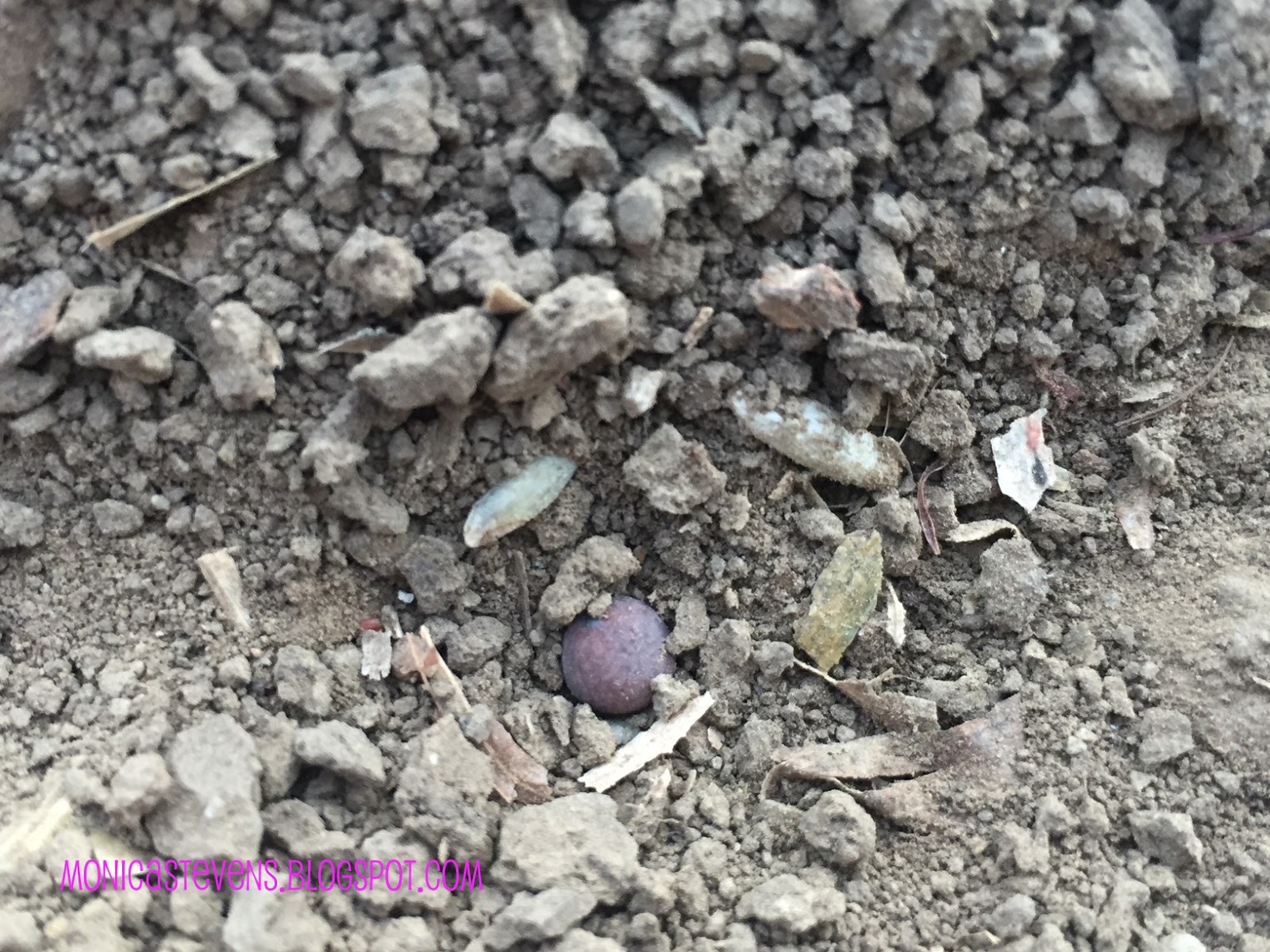
We drilled peas on October 2 [ post from seeding peas ] and rye on October 3. The Austrian Winter Peas are forage peas. They will be chopped and bagged next spring as silage for our cows.

emerging peas
Today, I scouted the field. I was happy to see that the forage peas were emerging! And, I am excited to see how much they grow next week!

Friday, October 5, 2018

Friday on the Farm

Austrian Winter Peas were seeded in a field. Eight acres of winter peas will be used as forage. Next spring, they will be chopped and bagged as silage for our cows.

austrian winter peas

Rye and Austrian Winter Peas were drilled in a field where corn was chopped for silage. Seeding rye and peas on the field will protect the soil from erosion. The rye and peas will be chopped and bagged next spring as forage. It should be great forage!

peas and rye

It rained this morning, so the forage peas and rye should have a great start to growing. It look forward to seeing the progress of the peas!

Friday, September 28, 2018

Friday on the Farm


Harvest started. Today, I hauled corn in from the field into a grain bin to fill. I always enjoy watching the bin fill as loads of grain are hauled into the site. Golden kernels of corn sprinkle down from above.  

[ view agriculture photos @ monicastevens.photoshelter.com ]

Friday, September 21, 2018

Friday on the Farm

We finished baling hay for the 2018 season!
 

It is so nice to have our hay rolled up for 2018. We have been busy cutting, tedding, raking, baling, and moving hay over the past four months.
 
During the hay season, we baled 400 large round bales and 1800 small square bales for our cows, calves, and bulls. We feed the round bales throughout the winter and spring. And, we feed the square bales to our pregnant cows during calving season in the spring.

 
I love seeing the new growth of alfalfa, clover, and brome after it has been cut and baled. It is beautiful to see the tender, emerald green leaves glowing under the warmth of the late summer sun.


[ view agriculture photos @ monicastevens.blogspot.com ]

Friday, July 20, 2018

conservation

On our family farm, conservation and stewardship have always been important.
 
 
take care of the land, and the and will take care of you - Hugh Hammond Bennett

My grandpa believed in conservation and being a steward of the land. He passed along  the passion for agriculture, farming, conservation, and stewardship to us.

My dad has been farming for over 50 years. And over those years, he has utilized numerous conservation practices on the farm. For more than 35 years,  he has farmed using no-till. That has proven to be very beneficial to the soil health on our farms. He has improved the farms with grassed waterways and tile to safely move surface and subsurface water off fields. Vegetative filter strips along crop fields border creeks also offer protection from erosion. My dad has used crop rotation ( corn, soybeans, hay ) and planted along contours of fields. Cover crops ( rye, oats, turnips, millet ) are planted to protect the soil, improve soil fertility, and for our cows to graze as high quality forage.

Permanent pasture where our cattle graze is on soil that is more sensitive to erosion. Installing rip rap along creek banks for stream bank stabilization has protected creeks in pastures from erosion. Pastures, hay fields, and fence rows provide great habitat for wildlife. We often see wildlife among our cow herds... deer, turtles, rabbits, bees, butterflies, quail, and a variety of other birds. It makes my heart happy.       

This sign was installed on the farm. And, it means so much to me. My grandpa would be so proud.